
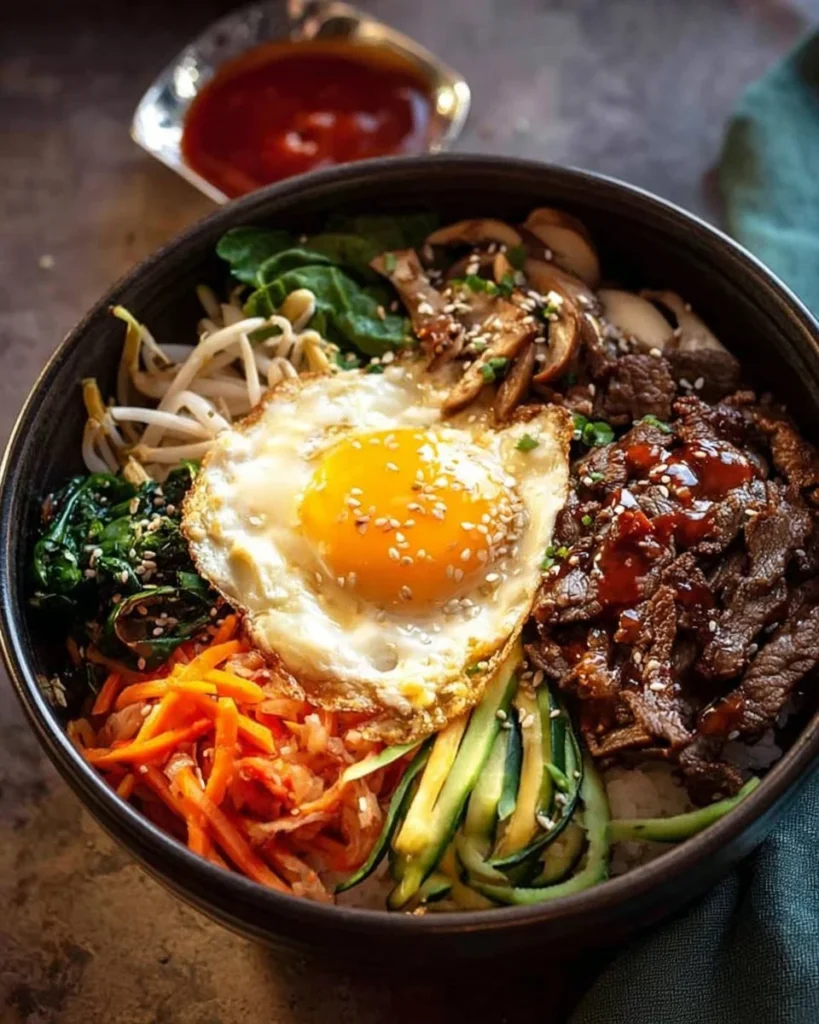
why make this recipe
Bibimbap is a delicious and colorful Korean dish that is not only tasty but also very nutritious. It’s a fantastic way to use up various vegetables and proteins. This dish is versatile, allowing you to adapt it with whatever you have on hand. Plus, it’s a complete meal in one bowl, making it perfect for lunch or dinner.
how to make Bibimbap
Ingredients:
- 4 cups cooked white rice, preferably short grain (Note 1)
- 4 eggs
- 2 tsp sesame seeds
- 250 g/8oz beef tenderloin or thick steak, very finely sliced (subs, Note 2)
- 1/4 green apple, grated using box grater (Note 3)
- 3 garlic cloves, minced
- 1 tbsp soy sauce, light or all purpose (Note 4)
- 1 tbsp honey (or brown sugar)
- 2 tsp sesame oil, toasted (Note 9)
- 2 carrots, large, cut into 5 x 0.5cm/2 x 1/5″ batons
- 2 zucchini, large, cut into 5 x 0.5cm/2 x 1/5″ batons
- 1 bunch of spinach, cut into 5cm/2″ lengths
- 8 dried shiitake mushrooms, large (Note 5)
- 4 cups bean sprouts
- 2 tsp garlic, minced (3 cloves)
- 8 tsp vegetable oil, separated
- 1/2 tsp salt
- 1.5 tsp soy sauce, light or all purpose (Note 4)
- 1/4 tsp fish sauce (sub soy)
- 1/4 tsp white sugar
- Sesame oil, toasted (Note 9)
- 4 tbsp gochujang paste (Note 6)
- 2 tbsp mirin (Note 7)
- 2 tbsp rice vinegar (Note 8)
- 1.5 tsp soy sauce (Note 4)
- 3 tsp white sugar
- 1 garlic clove, finely grated
- 2.5 tsp sesame oil, toasted (Note 9)
Directions:
Bibimbap Sauce:
- In a bowl, mix together gochujang paste, mirin, rice vinegar, soy sauce, white sugar, finely grated garlic, and sesame oil. Set aside.
Marinated Beef:
- In another bowl, combine the sliced beef, minced garlic, soy sauce, honey, and sesame oil. Toss well to coat the beef and let it marinate for about 30 minutes.
Prepare Vegetables:
- Prepare the carrots and zucchini by cutting them into batons. Soak the dried shiitake mushrooms in water until they soften, then slice. Cut the spinach and rinse the bean sprouts.
Cook Vegetables:
- Heat a pan over medium heat and add 1 tsp of vegetable oil. Cook each vegetable separately. Start with the carrots and cook for 2-3 minutes until tender. Add 1 more tsp of oil and sauté the zucchini for about 2 minutes. Finally, stir-fry the spinach and bean sprouts in the same way, seasoning them with salt.
Cook Beef:
- In the same pan, add the marinated beef and cook until it’s browned and cooked through.
Fry Eggs:
- In a separate pan, heat the remaining vegetable oil and fry the eggs sunny-side up.
Assemble:
- Place a serving of warm rice in a bowl. Arrange the cooked vegetables and beef on top. Add the fried egg and sprinkle with sesame seeds. Drizzle with bibimbap sauce.
how to serve Bibimbap
Serve Bibimbap hot in a bowl. The best way to enjoy it is to mix everything together before eating.
how to store Bibimbap
If you have leftovers, store each component separately in airtight containers in the refrigerator. The rice, vegetables, and beef can be reheated.
tips to make Bibimbap
- Use fresh seasonal vegetables for the best flavor.
- Customize the proteins; chicken or tofu are great substitutes for beef.
- Adjust the amount of gochujang to suit your spice preference.
variation
You can create a vegetarian version of Bibimbap by omitting the beef and using more veggies or tofu. You can also add other ingredients like kimchi or radish for added flavor and texture.
FAQs
1. Can I make Bibimbap ahead of time?
Yes, you can prepare the components ahead of time and store them separately in the refrigerator. Just assemble and heat before serving.
2. What can I substitute for gochujang?
If you can’t find gochujang, you can mix red chili paste with a little sugar and soy sauce as a substitute.
3. Is Bibimbap spicy?
Bibimbap can be spicy depending on how much gochujang you add. You can adjust the spice level according to your taste by using less gochujang or none at all.
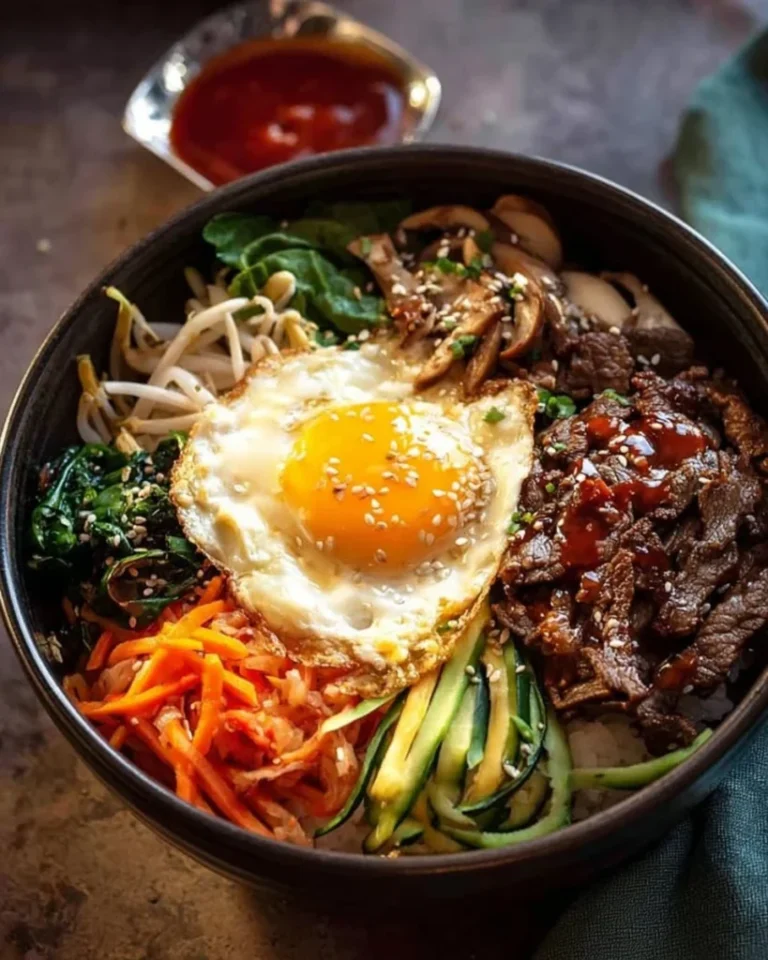
Bibimbap
Bibimbap is a delicious and colorful Korean dish, packed with nutrients and versatile elements that make it a complete meal in one bowl.
- Total Time: 45 minutes
- Yield: 4 servings 1x
Ingredients
- 4 cups cooked white rice, preferably short grain
- 4 eggs
- 2 tsp sesame seeds
- 250 g beef tenderloin or thick steak, very finely sliced
- 1/4 green apple, grated
- 3 garlic cloves, minced
- 1 tbsp soy sauce, light or all purpose
- 1 tbsp honey (or brown sugar)
- 2 tsp sesame oil, toasted
- 2 large carrots, cut into batons
- 2 large zucchinis, cut into batons
- 1 bunch of spinach, cut into lengths
- 8 dried shiitake mushrooms, soaked and sliced
- 4 cups bean sprouts
- 8 tsp vegetable oil, separated
- 1/2 tsp salt
- 1.5 tsp soy sauce, light or all purpose
- 1/4 tsp fish sauce
- 1/4 tsp white sugar
- 4 tbsp gochujang paste
- 2 tbsp mirin
- 2 tbsp rice vinegar
- 3 tsp white sugar
- 1 garlic clove, finely grated
- 2.5 tsp sesame oil, toasted
Instructions
- Prepare the bibimbap sauce by mixing gochujang paste, mirin, rice vinegar, soy sauce, white sugar, finely grated garlic, and sesame oil in a bowl. Set aside.
- Combine the sliced beef, minced garlic, soy sauce, honey, and sesame oil in another bowl to marinate for 30 minutes.
- Cut the carrots and zucchini into batons. Soak the dried shiitake mushrooms in water until softened, then slice. Rinse the spinach and bean sprouts.
- Heat a pan over medium heat with 1 tsp of vegetable oil, then cook the carrots for 2-3 minutes until tender. Add oil and sauté the zucchini for about 2 minutes. Stir-fry spinach and bean sprouts separately, seasoning with salt.
- Add the marinated beef to the pan and cook until browned and cooked through.
- Fry the eggs sunny-side up in a separate pan with the remaining vegetable oil.
- Assemble the bibimbap by placing a serving of warm rice in a bowl, arranging the cooked vegetables and beef on top, adding the fried egg, and sprinkling with sesame seeds. Drizzle with bibimbap sauce.
Notes
Use fresh seasonal vegetables for the best flavor. You can customize the proteins; chicken or tofu are great substitutes for beef.
- Prep Time: 30 minutes
- Cook Time: 15 minutes
- Category: Main Course
- Method: Frying and Assembling
- Cuisine: Korean
- Diet: None
Nutrition
- Serving Size: 1 bowl
- Calories: 550
- Sugar: 10g
- Sodium: 800mg
- Fat: 20g
- Saturated Fat: 5g
- Unsaturated Fat: 10g
- Trans Fat: 0g
- Carbohydrates: 75g
- Fiber: 6g
- Protein: 30g
- Cholesterol: 150mg
Keywords: Bibimbap, Korean food, rice bowl, healthy meal